




Beginner must know / 01
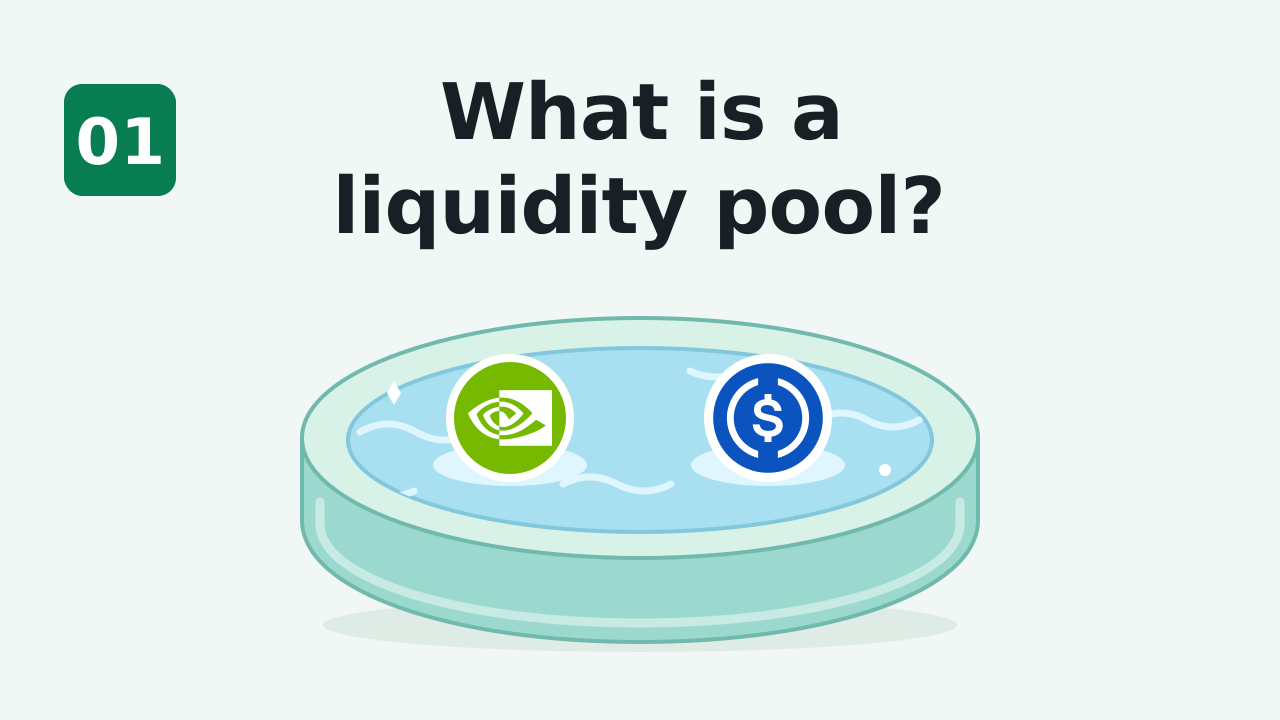
What is a liquidity pool?
This video summarizes the key points of this lesson.
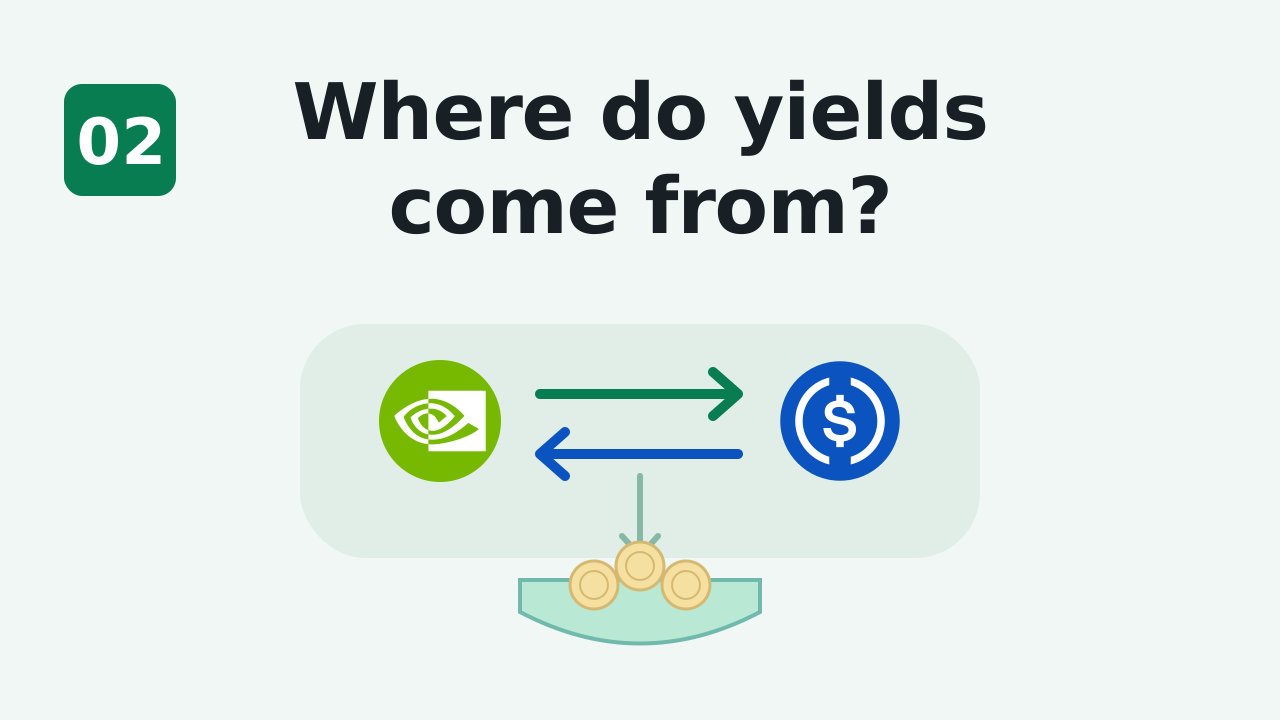
Think of a currency exchange counter. Its drawer holds dollars and euros so customers can exchange one for the other.
who fund the drawer.Supply assets ↓
Physical currencies
Tokens in a smart contract
One pool. Two tokens.
A liquidity pool is a smart contract holding a pair of tokens that people can swap. In our example, the pair is a Nvidia token issued by Ondo Finance and USDC.
Liquidity providers, LPs, supply the assets. LPs deposit tokens they hold into the liquidity pool. These tokens are available for traders to trade.
How are asset prices determined in a pool?
When Turbo Range opens a new pool, it sets the initial price using the Ondo RFQ price. If the RFQ market is unavailable, it uses the quote from the end of the previous open trading session.
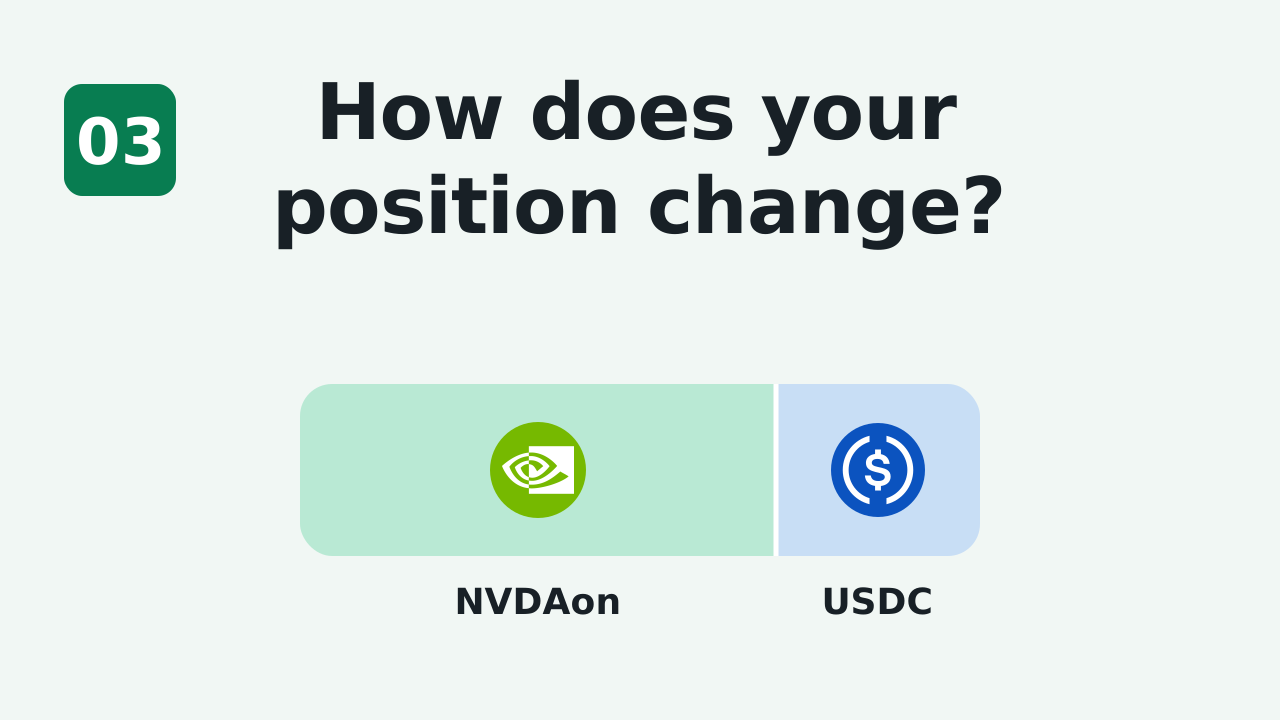
After that, trades move the price according to the smart contract’s rules. Buying NVDAon with USDC pushes its price up; selling NVDAon pushes it down. How much the price moves depends on the trade size and the liquidity available across the prices the trade passes through.
A trader buys NVDAon
USDC goes in. NVDAon comes out.
Price rises ↑A trader sells NVDAon
NVDAon goes in. USDC comes out.
Price falls ↓How do onchain stock prices reflect real stock prices?
Arbitrageurs trade between the pool and Ondo RFQ prices, buying where it is cheaper and selling where it is more expensive. These trades bring the prices closer together until the gap no longer covers trading costs.
- LPs put their tokens into a pool so other people can trade them.
- Swaps change token amounts and prices.
- Arbitrage links onchain stock prices to real stock prices.


